Heat Pump Balance Point: Where It Hands Over to Backup Heat
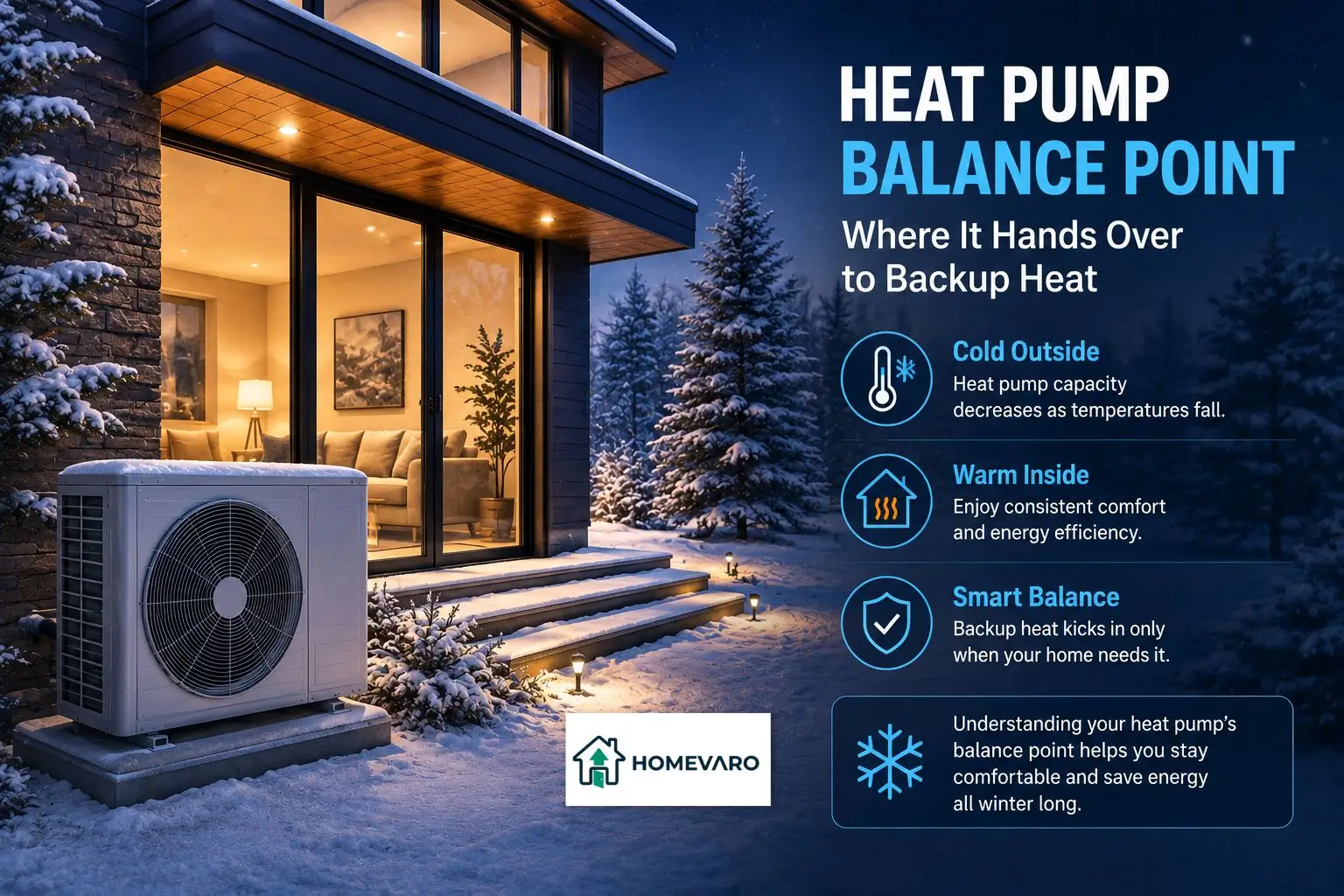
Every heat pump has a temperature below which it stops being able to keep up on its own, no matter how well it is maintained or how correctly it was installed. That temperature is called the balance point, and understanding it explains a lot of behavior that otherwise looks like the system struggling or malfunctioning on the coldest days of the year.
What “balance point” means in plain terms
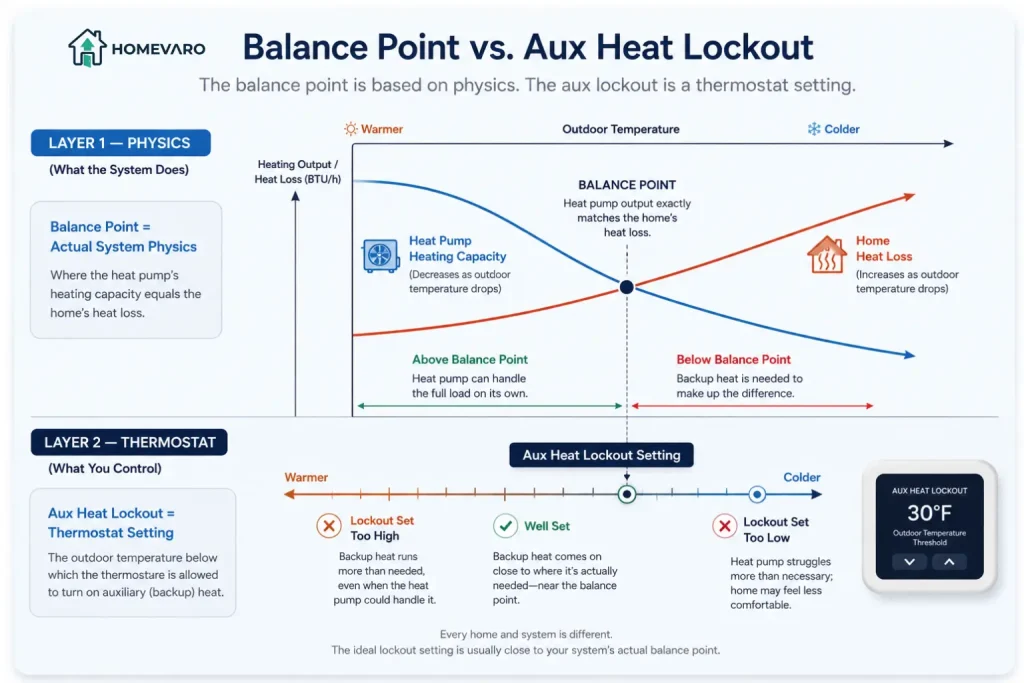
Your house loses heat to the outdoors constantly, faster as the gap between inside and outside temperature grows. Your heat pump, meanwhile, produces less heating capacity as the outdoor air gets colder, because it works by moving heat that already exists in the outside air into your house, and there is simply less of that heat available to move as the air cools.
The balance point is the specific outdoor temperature at which those two lines cross: the heat pump’s output exactly matches the house’s heat loss. Above that temperature, the heat pump can keep up entirely on its own. Below it, the house is losing heat faster than the heat pump alone can replace it, and something else needs to make up the difference.
Why colder outside means less heat to move, not just more heat needed
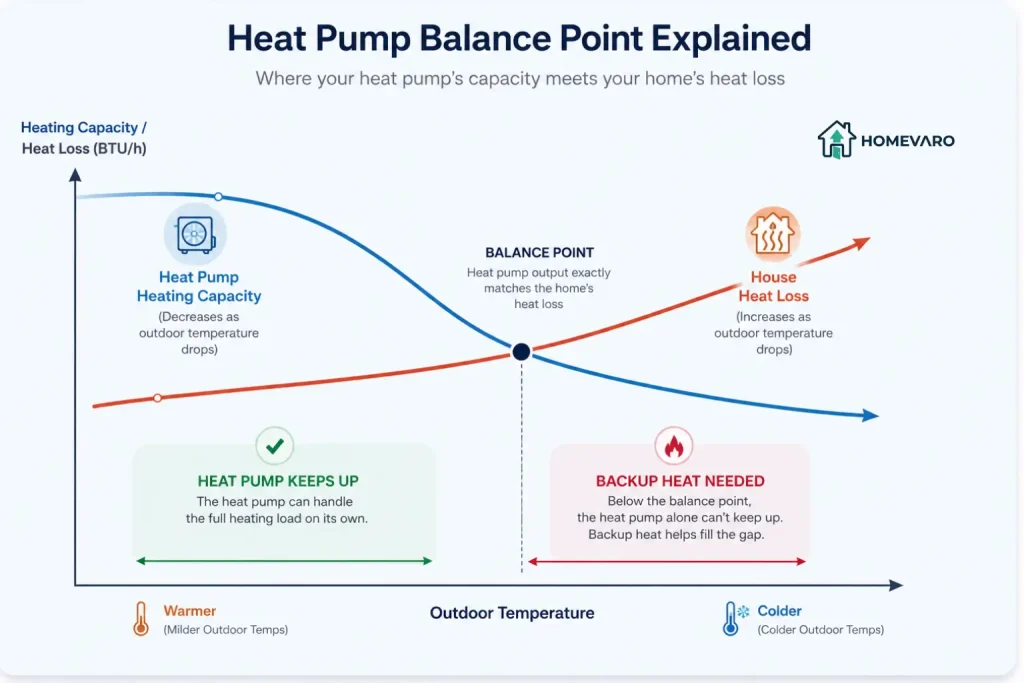
It is easy to assume a heat pump just has to “work harder” as it gets colder, the way a furnace burns more fuel to put out more heat. A heat pump works differently. Its capacity to produce heat actually declines as the outdoor temperature drops, because the physical process depends on a temperature difference between the outside air and the refrigerant inside the system, and that difference shrinks as the outside air gets colder.
So on the coldest days, two things are happening at once: your house needs more heat than usual, and the heat pump itself can supply less than usual. That combination is exactly what the balance point describes, and it is why the system needs help specifically on the days it needs help the most.
The commonly cited range, and why yours could be very different
Energy Vanguard, a widely cited building-science and HVAC engineering source, describes a general residential balance point in the rough range of 25°F to 35°F, depending on the specific heat pump model and how well the home is insulated. That is a real, named range, but it is not a universal answer.
The same source and others note that a well-sized, cold-climate heat pump system, the kind more commonly installed in places like New England, can have a balance point as low as 5°F or even below 0°F, because the equipment itself is selected and sized specifically to keep performing at much lower outdoor temperatures. A home with excellent insulation and a properly sized system pushes the balance point lower. An older, undersized system in a drafty house pushes it higher.
None of this tells you your own system’s specific number, because that depends on your exact equipment’s capacity curve and your home’s actual heat loss, both of which are in the installer’s specifications rather than anything a general article can calculate for you.
How the balance point connects to your aux lockout setting
The balance point is the physics; the aux heat lockout is the thermostat setting built around that physics. The aux lockout setting tells the thermostat the outdoor temperature below which it is allowed to bring backup heat online to help the heat pump. In an ideally configured system, that lockout temperature sits close to the system’s actual balance point: backup heat stays off while the heat pump alone can genuinely keep up, and comes online once the outdoor temperature drops far enough that it is actually needed.
A lockout set well above the real balance point means backup heat runs more than it needs to, on days the heat pump could have handled the load alone, which is the direct mechanism behind an unexpectedly high winter bill. Understanding the balance point is what makes the aux lockout setting make sense as something worth getting right, rather than an arbitrary number in a menu.
Signs you’re regularly operating below your system’s balance point
A few patterns suggest your home is spending real time below wherever your system’s balance point actually sits:
- Backup heat runs on most cold days of a typical winter, not just the rare extreme cold snap. If aux or emergency heat feels like a regular occurrence rather than an occasional one, the balance point may sit higher than the local climate genuinely allows for comfortable, efficient heating with the heat pump alone.
- Recovery periods stretch noticeably longer as the season gets colder. This ties directly to the recovery mechanism covered here: a system working near or past its balance point takes longer to close the same setback gap.
- The difference between “emergency heat” and normal backup operation starts to blur, because the system is leaning on backup heat so often it stops feeling like an emergency. The real distinction between the two is covered here, and it matters, because one is meant to be occasional and the other is a manual last resort.
None of these signs mean the equipment is broken. They mean it is worth a conversation with an HVAC technician about whether the balance point, the aux lockout setting, or both are matched to how cold your winters actually get.
FAQ
What is a heat pump’s balance point?
It is the outdoor temperature at which a heat pump’s own heating capacity exactly matches the amount of heat your house is losing. Above that temperature the heat pump can handle the load alone; below it, backup heat is needed to make up the difference.
Is a lower balance point better?
Generally, yes, in the sense that a lower balance point means the heat pump can keep up on its own down to a colder outdoor temperature before backup heat is needed, which usually means lower running costs. A lower balance point typically comes from a properly sized system and a well-insulated home, not from a thermostat setting alone.
How do I find my own system’s balance point?
It is not something a general article can calculate, since it depends on your exact equipment’s capacity curve at different outdoor temperatures and your home’s specific heat loss. Your installer’s original sizing paperwork, if you have it, or an HVAC technician working from your equipment’s specifications, is the accurate way to find it.
Does insulation change my balance point?
Yes, directionally. A better-insulated, tighter home loses heat more slowly, which lowers the outdoor temperature at which the heat pump alone can no longer keep up. Insulation improvements will not change the heat pump’s own output curve, but they do change how much output the house actually needs, which is the other half of where the balance point sits.