What Type of HVAC System Do I Actually Have?
The fastest way to tell what kind of heating system you have is to look at your thermostat: if it has an “Emergency Heat” or “Aux” setting, you almost certainly have a heat pump. If it does not, and you have visible radiators or metal baseboard units instead of vents, you likely have a boiler or line-voltage electric heat. Everything else- an equipment label check and a look at the outdoor unit- confirms it. None of this requires opening a panel.
This matters here because every other article in this cluster- the setting that decides your winter bill, the outdoor temperature where your system hands over to backup heat, the button you should be afraid to press- only applies if you have a heat pump. If you do not, they simply do not apply to your system, and this page is where that gets sorted out first.
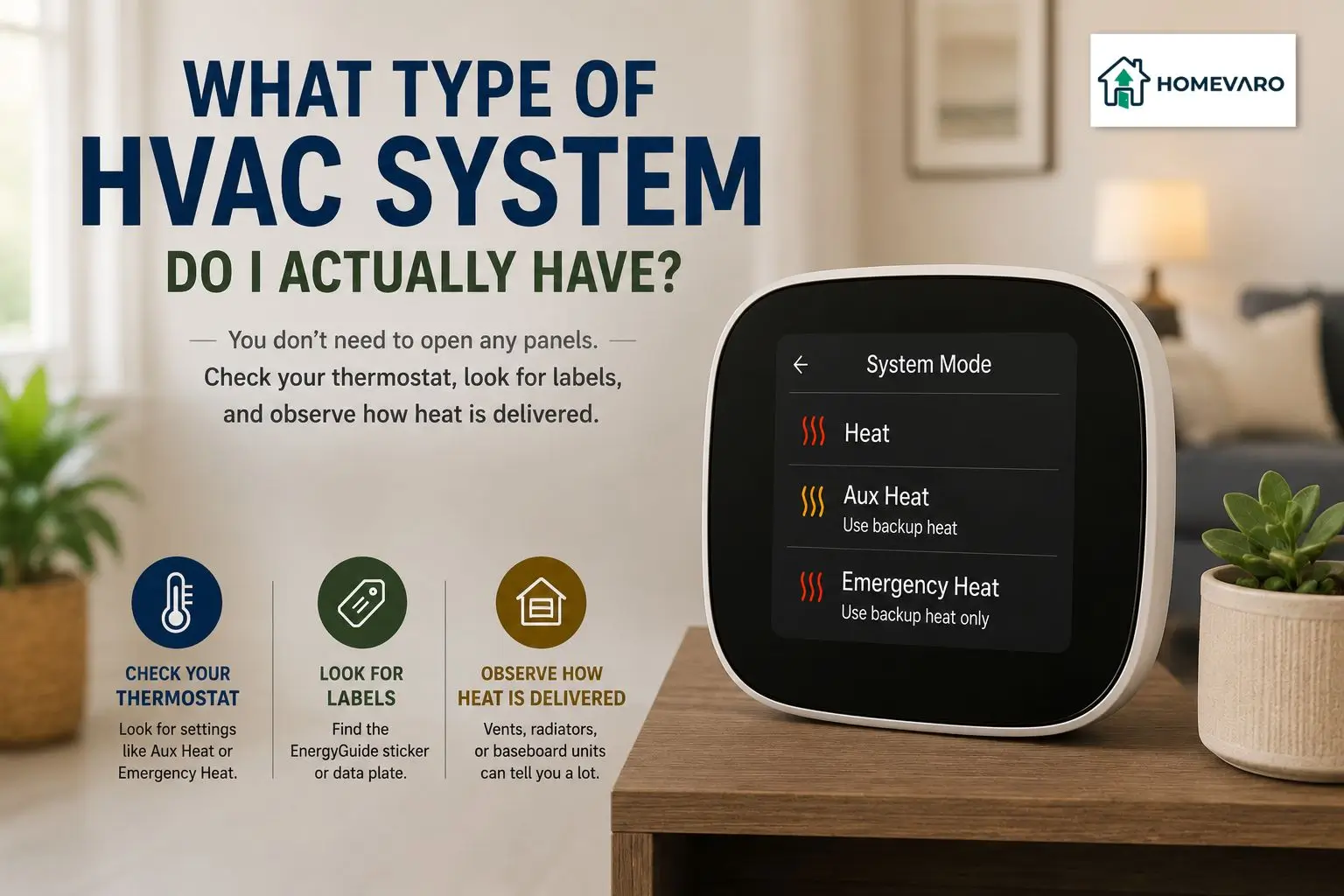
The fastest tell: does your thermostat have an “Emergency Heat” or “Aux” setting?
Look at your thermostat’s mode options, or the app if it is already a smart thermostat. A mode labeled “Emergency Heat,” “Em Heat,” or “Aux Heat” is a strong indicator that your system is a heat pump. Furnaces and boilers do not have this mode, because they have no separate backup heat source to fall back to; the primary heat source is the only heat source.
This is not a perfect guarantee. Some heat pump thermostats hide the label differently, and a very old system might not expose it clearly. Treat it as your first, strongest clue, then confirm with the checks below.
Read the equipment label (and the federal EnergyGuide sticker)
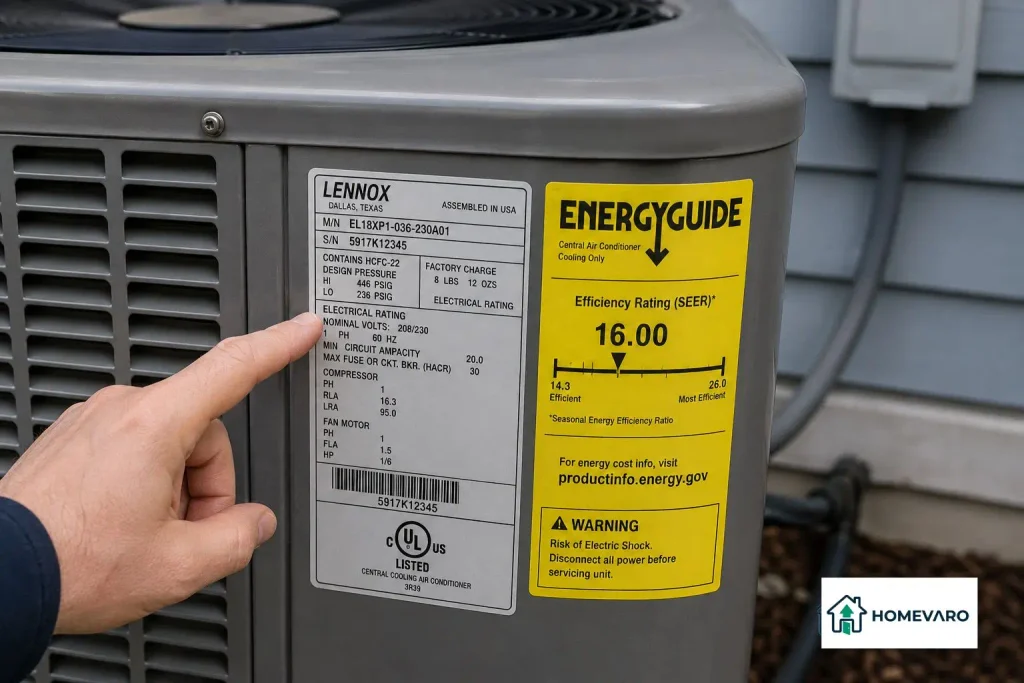
Every piece of covered heating and cooling equipment sold in the United States carries a yellow EnergyGuide label, a sticker required by the Federal Trade Commission. If you can find it on your outdoor unit or your indoor furnace or air handler cabinet, it states the equipment type directly.
Alongside or instead of the EnergyGuide sticker, look for the manufacturer’s own data plate, usually a metal or adhesive label on the indoor unit (in a basement, closet, attic, or garage) or the outdoor unit. It typically states the fuel or energy source (natural gas, electric, or a refrigerant designation like R-410A, which points to a heat pump or air conditioner rather than a gas furnace).
What the outdoor unit tells you
If you have an outdoor unit that looks like a metal box with a fan on top, similar to a central air conditioner, you have either central air conditioning paired with a separate furnace, or a heat pump. The unit itself often looks nearly identical either way, which is why the thermostat check above and the label check matter more than appearance alone.
If you have no outdoor unit at all, and your heat comes from wall-mounted units, baseboard units along the floor, or radiators, you likely have a ductless system, line-voltage electric heat, or a boiler, covered in more detail below.
Furnace, heat pump, or boiler: sound and delivery clues
A few behavior-based tells, useful alongside the label and the thermostat:
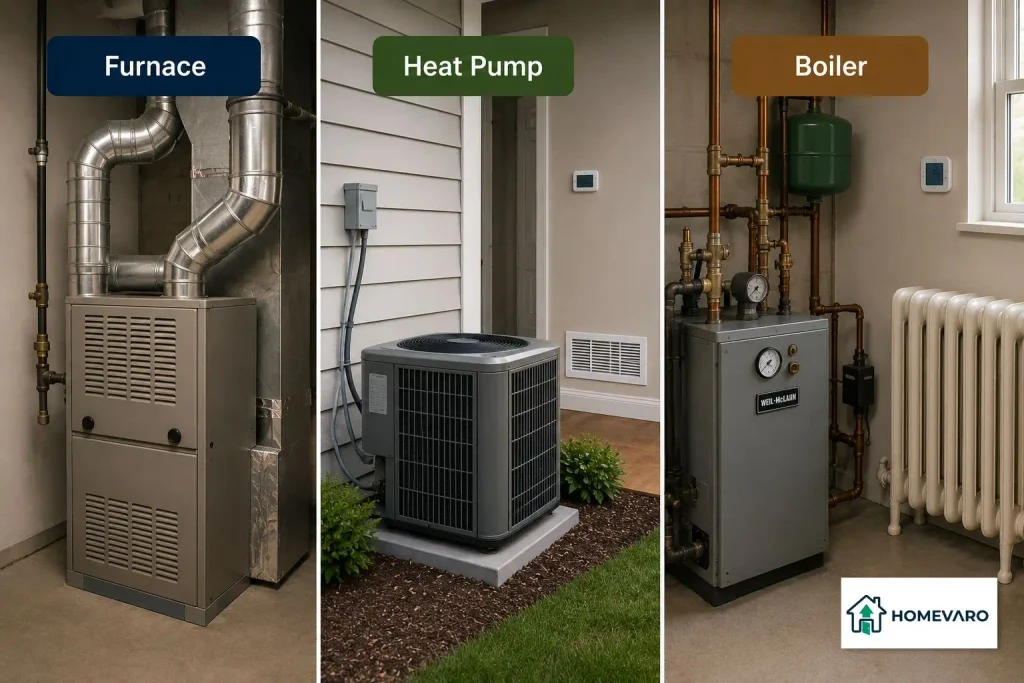
- A furnace delivers heat through ductwork and vents, and you can typically hear a blower fan running while it operates.
- A heat pump also delivers heat through ductwork and vents in most residential setups, sounds similar to central air conditioning when running, and is the system most likely to have the Emergency Heat mode described above.
- A boiler delivers heat through hot water or steam, into radiators or metal baseboard units along the walls or floor, not through vents. If you have no ductwork or vents anywhere in the house and heat comes from these fixtures instead, you have a boiler, not a furnace or heat pump, and the thermostat and control questions in the rest of this cluster work differently for that kind of system.
Line-voltage baseboard or wall heat: the giveaway
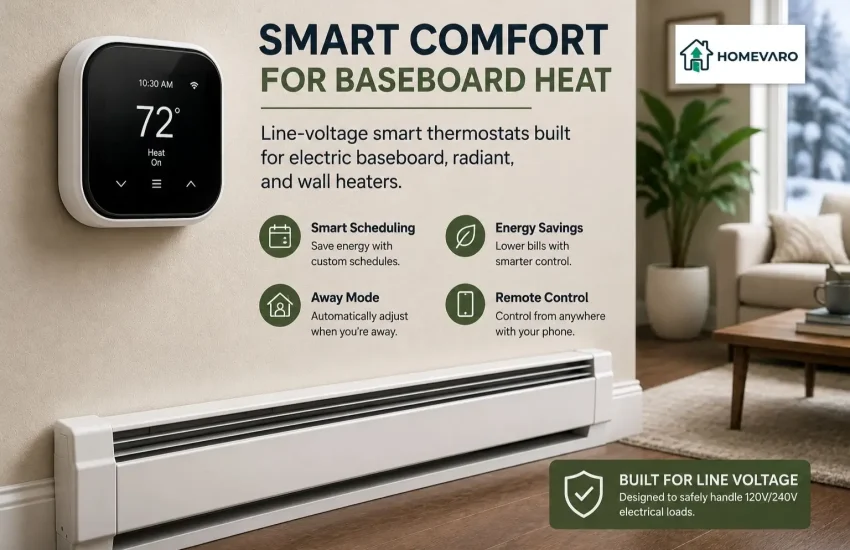
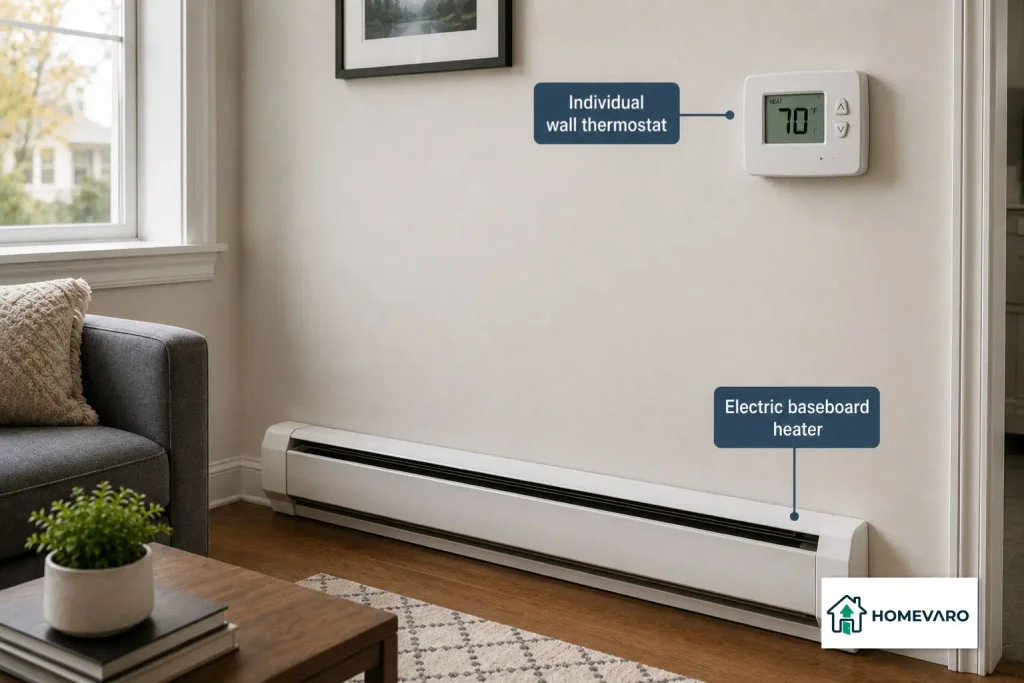
If your heat comes from individual baseboard heaters or wall units, each with its own thermostat mounted directly on the wall near the unit rather than one central thermostat for the house, you very likely have line-voltage electric resistance heat rather than a central, ducted system. This is a meaningfully different setup for smart thermostat purposes, covered specifically in this site’s guide to baseboard and line-voltage compatibility.
What to do once you know
Once you have identified your system type, here is where to go next on this site:
- If you found an Emergency Heat or Aux mode, or otherwise confirmed a heat pump: the setting most worth understanding next is the aux heat lockout, since it is the single setting most likely to be quietly inflating a heat pump household’s winter bill.
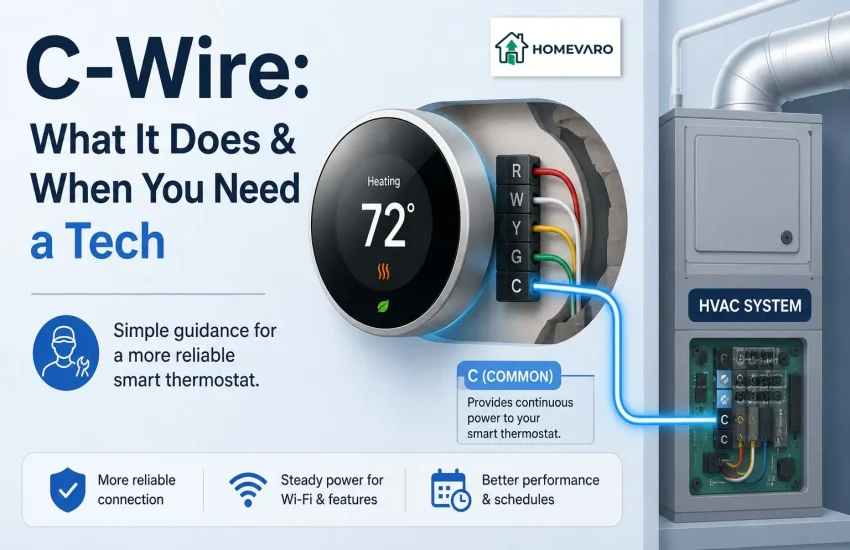
- If you have a central, ducted furnace, heat pump, or boiler and are wiring up a new smart thermostat: the next practical question is almost always whether you have a C-wire at the thermostat location.
- If you found individual baseboard or wall units with their own local thermostats: most popular smart thermostats will not work with your system, and this site’s baseboard and line-voltage guide explains why and what to look for instead.
Everything on this page stops at reading labels and observing how the system behaves. Any check that requires opening a furnace cabinet, an electrical panel, or a plenum is a job for a licensed HVAC technician, not a homeowner identification step.
Whichever category you land in, once wiring and compatibility are sorted, this site’s thermostat setup guide covers the baseline schedule-building approach that applies to a central, ducted system.
FAQ
How do I know if I have a heat pump or a regular air conditioner?
The clearest sign is an Emergency Heat or Aux mode on the thermostat, which only heat pump systems have. The federal EnergyGuide label and the manufacturer’s data plate on the outdoor unit will also state the equipment type directly.
What does “Emergency Heat” on my thermostat mean about my system?
It generally means your system is a heat pump. Emergency Heat is a manual mode that shuts the heat pump off and runs backup heat alone, and only systems with a heat pump and backup heat source have this option at all.
Do I have a furnace or a boiler?
If your heat comes out of vents through ductwork and you can hear a blower fan, you have a furnace (or a heat pump using the same ductwork). If your heat comes from radiators or metal baseboard units and there is no ductwork, you have a boiler.
Can I identify my HVAC system without opening any panels?
Yes. The thermostat’s mode options, the federal EnergyGuide label, the manufacturer’s data plate, and how the heat is delivered (vents, radiators, or individual baseboard units) are all visible without opening a furnace cabinet or an electrical panel.