Baseboard Heat: Why Most Smart Thermostats Don’t Fit
If you have electric baseboard, radiant, or wall heaters and a popular smart thermostat like Nest or Ecobee did not work with your system, it is not a defect or a setup mistake. Those thermostats are built for a low-voltage (24V) control circuit that runs a furnace or heat pump. Baseboard, radiant and many wall heaters run on line voltage, 120V or 240V, directly through the thermostat, and a low-voltage smart thermostat is not built to switch that kind of load safely. You need a thermostat from a different category entirely, not a different brand of the same kind.
Low voltage vs line voltage, in plain terms
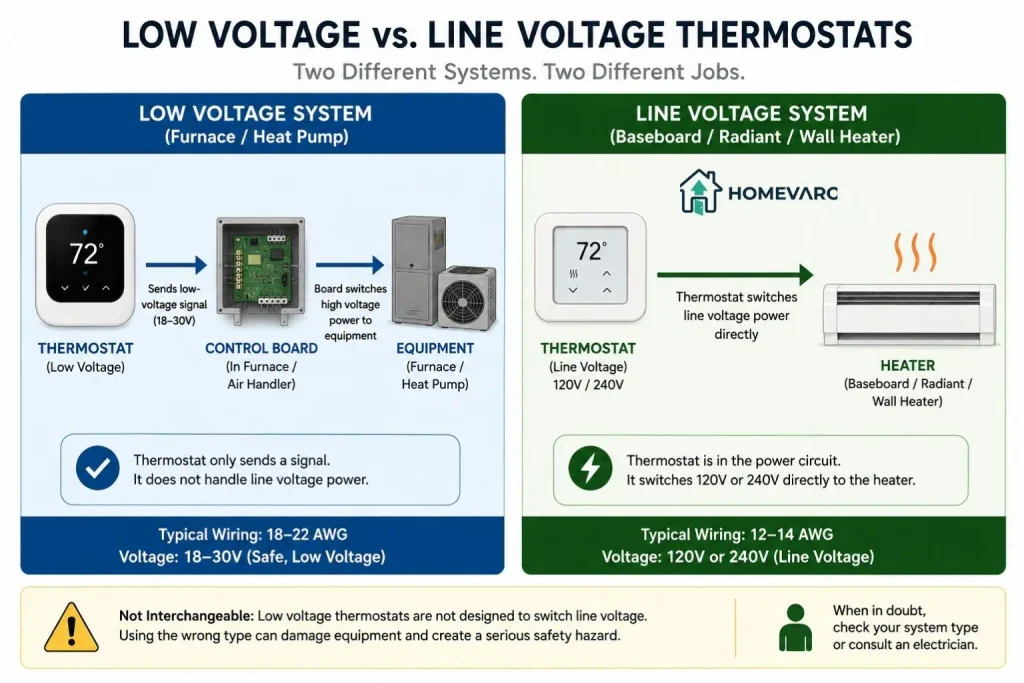
A furnace or heat pump’s thermostat does not carry the power that heats your home. It sends a small, low-voltage signal to a separate control board, which then switches the actual heating equipment on. That is why a Nest, Ecobee, or similar thermostat is a small, low-power device: it was never designed to handle household electrical current directly.
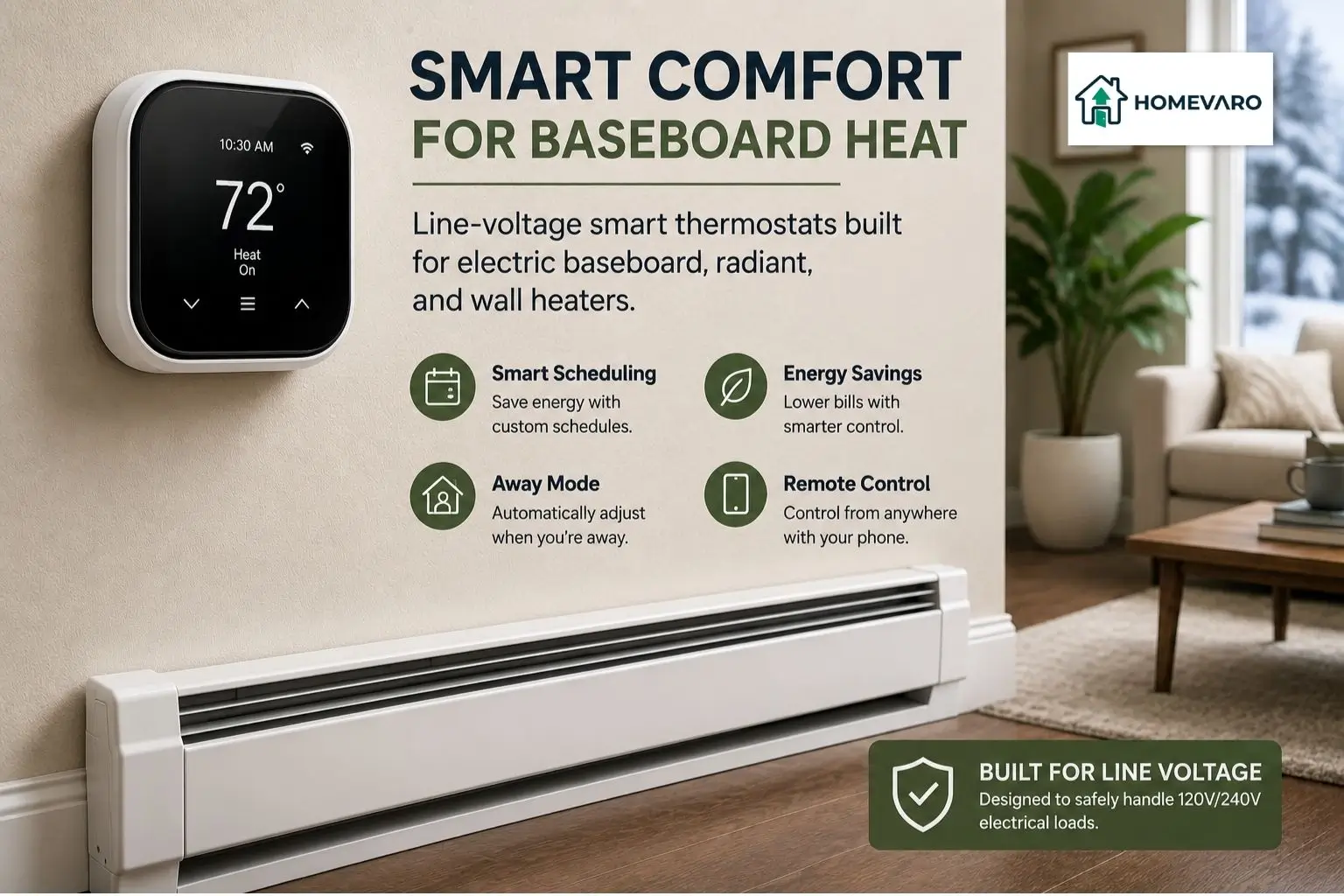
Baseboard, radiant panel, and many wall heaters skip that middle step. The thermostat itself sits directly in the circuit that powers the heating element, carrying the full line voltage, 120V or 240V depending on the installation. A thermostat built for the low-voltage signal side of a furnace simply is not rated or wired to do that job, and connecting one is not a matter of finding the right adapter; it is the wrong category of device for the circuit.
How to tell which one you have
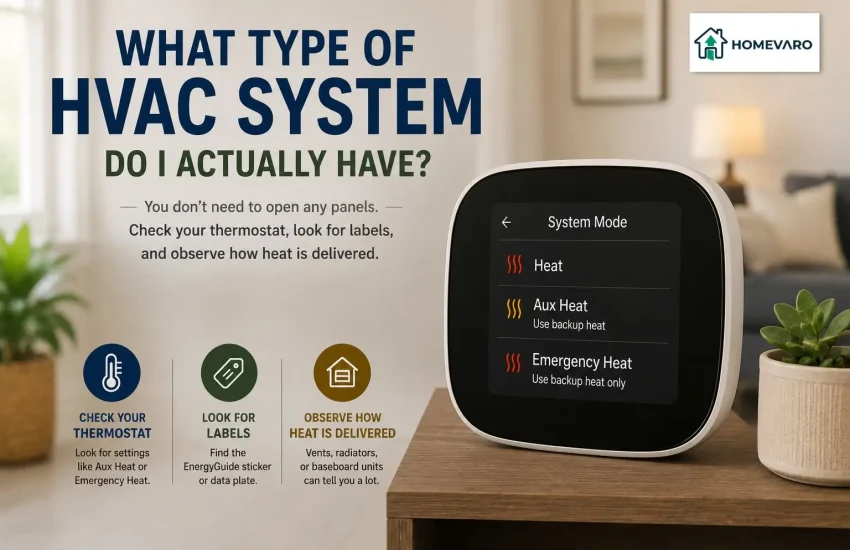
If your heat comes from individual units mounted along the floor (baseboard) or built into the wall, each with its own dedicated wiring rather than one shared duct system, you almost certainly have line-voltage heat. A simple check: look at the wires behind your existing thermostat or wall unit. A line-voltage system typically has two or four thicker wires directly, with no separate low-voltage control board elsewhere in the house that those wires lead back to. If you are unsure, this site’s guide to identifying your HVAC system covers this in more detail before you go any further.
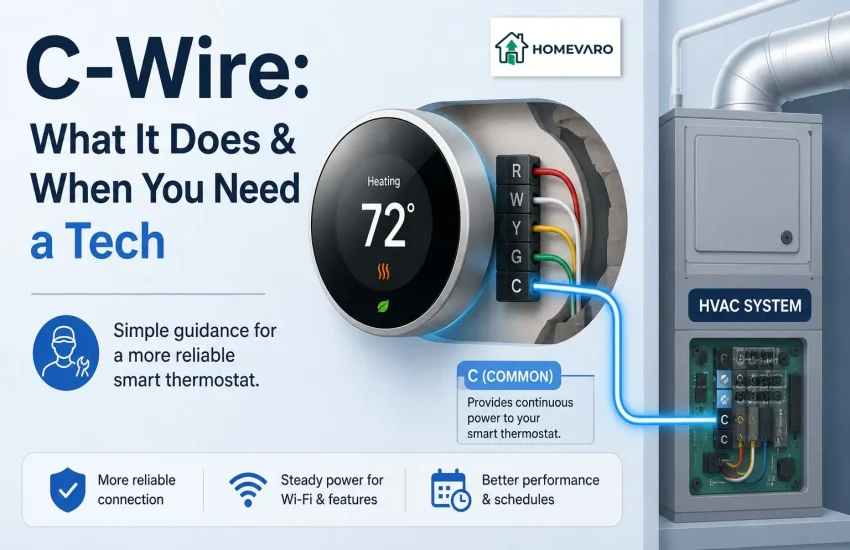
If instead you find a single, central wall thermostat connected to ductwork, you have a different, low-voltage system, and the wiring question that actually matters is the C-wire question covered separately on this site, not the voltage mismatch this page is about.
What a line-voltage smart thermostat needs to do differently
A thermostat built for baseboard or other line-voltage heat has to switch the full household current for that circuit directly, safely, and repeatedly, which is a meaningfully different engineering job than sending a low-voltage signal. This is why the category of thermostat built for baseboard heat exists separately from the general smart-thermostat market that Nest and Ecobee compete in, rather than as one more compatible model on the same list. Some models in this category also require a neutral wire at the installation, which not every existing baseboard setup has run, so confirming your wiring before buying matters here specifically.
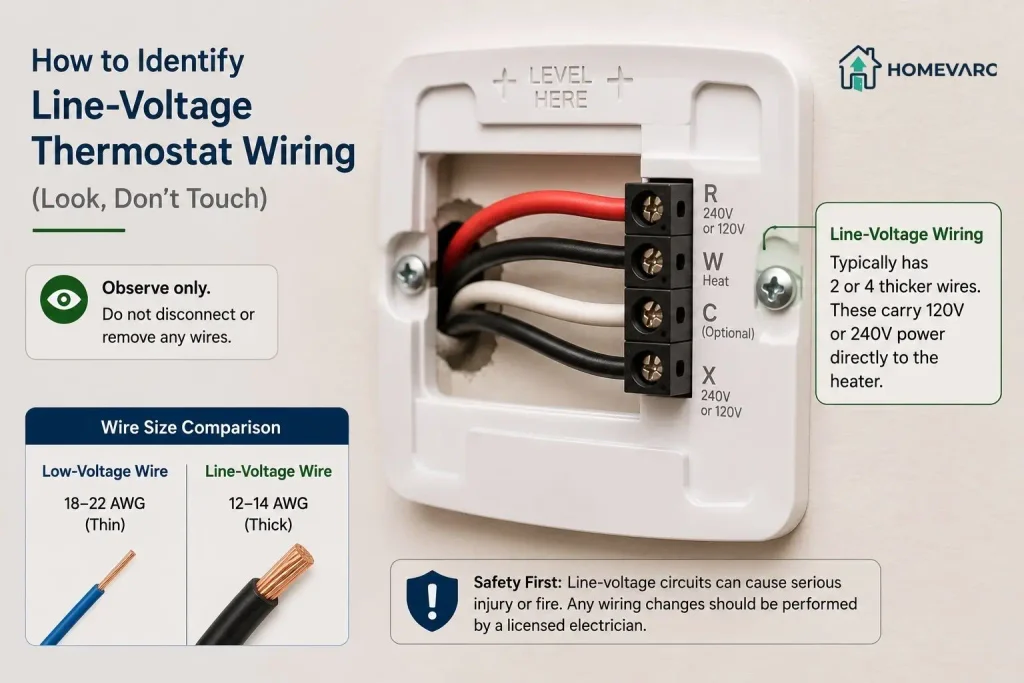
This site does not rank or recommend specific products (see this site’s note on affiliate disclosure), so the useful takeaway is the category to search for, “line-voltage” or “baseboard” smart thermostat, specifically, rather than assuming a thermostat marketed generally will work if you simply buy it and try.
A second, easy-to-miss spec in this category is the wattage or amperage rating. A line-voltage thermostat is rated to safely switch up to a specific electrical load, and an undersized rating paired with an oversized baseboard heater is a real mismatch, not a minor detail. Confirming your heater’s wattage against a given thermostat’s rated capacity matters as much as the neutral-wire question above, and it is exactly the kind of check worth bringing to an electrician alongside the installation itself rather than guessing.
What “smart” still means on a line-voltage system
The scheduling and away-detection ideas covered elsewhere on this site, a fixed schedule as the backbone, geofencing for irregular days, still apply once you have a compatible line-voltage thermostat installed. The device category is different; the underlying logic of widening the gap between your home and away temperature is not. A baseboard household running one flat temperature all day gives up the same savings a central-system household would, for the same reason.
Where this becomes an electrician’s job
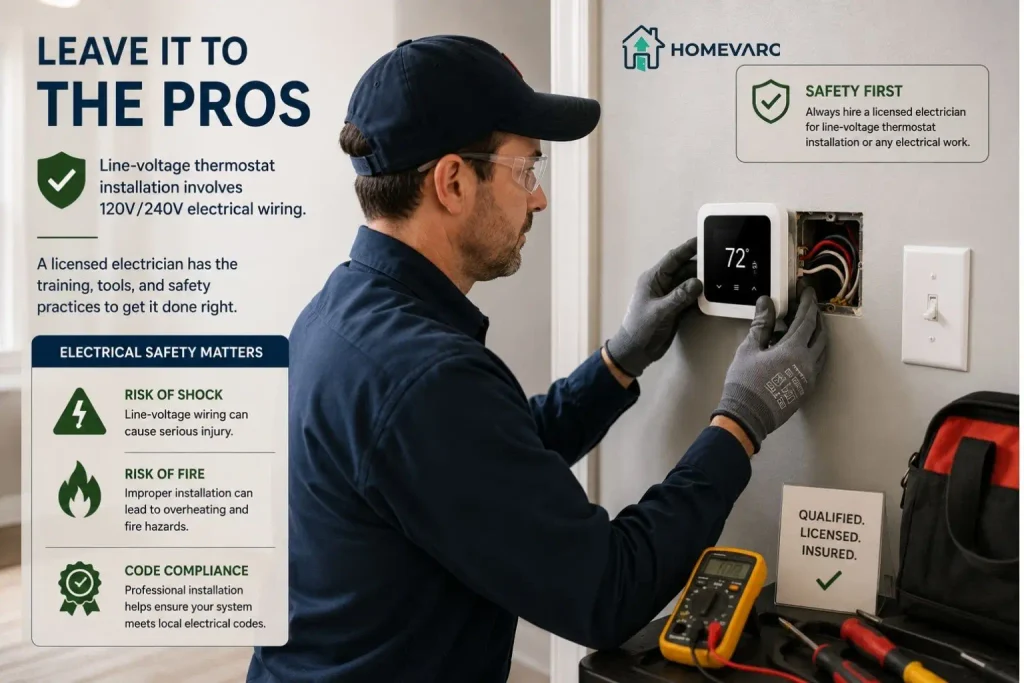
Checking your existing wall unit’s wire count and confirming whether you have a neutral wire available are things you can observe without disconnecting anything. Actually disconnecting a line-voltage circuit, installing a new line-voltage thermostat, or adding a neutral wire where one does not exist is electrical work on a live household circuit, and that is a licensed electrician’s job, without exception. A line-voltage mistake carries real shock and fire risk in a way a low-voltage furnace thermostat mistake does not, which is the reason this line is drawn firmly rather than framed as optional caution.
FAQ
Does a Nest or Ecobee work with baseboard heaters?
No, in almost all cases. Those thermostats are built for the low-voltage control circuit of a furnace or heat pump, not the line-voltage (120V/240V) circuit that powers a baseboard, radiant, or wall heater directly.
What is the difference between line voltage and low voltage thermostats?
A low-voltage thermostat sends a small signal to a separate control board that switches the actual heating equipment. A line-voltage thermostat sits directly in the circuit and switches the full household current itself, which requires different internal hardware entirely.
Can I install a line-voltage smart thermostat myself?
Observing your existing wiring and confirming what you have is fine to do yourself. Disconnecting or wiring a line-voltage circuit is licensed-electrician work because of the shock and fire risk involved.
Do line-voltage smart thermostats need a neutral wire?
Many models in this category do, and not every existing baseboard installation has one run to the thermostat location. Confirm this before buying, since it can affect which specific models are even an option for your wiring.